
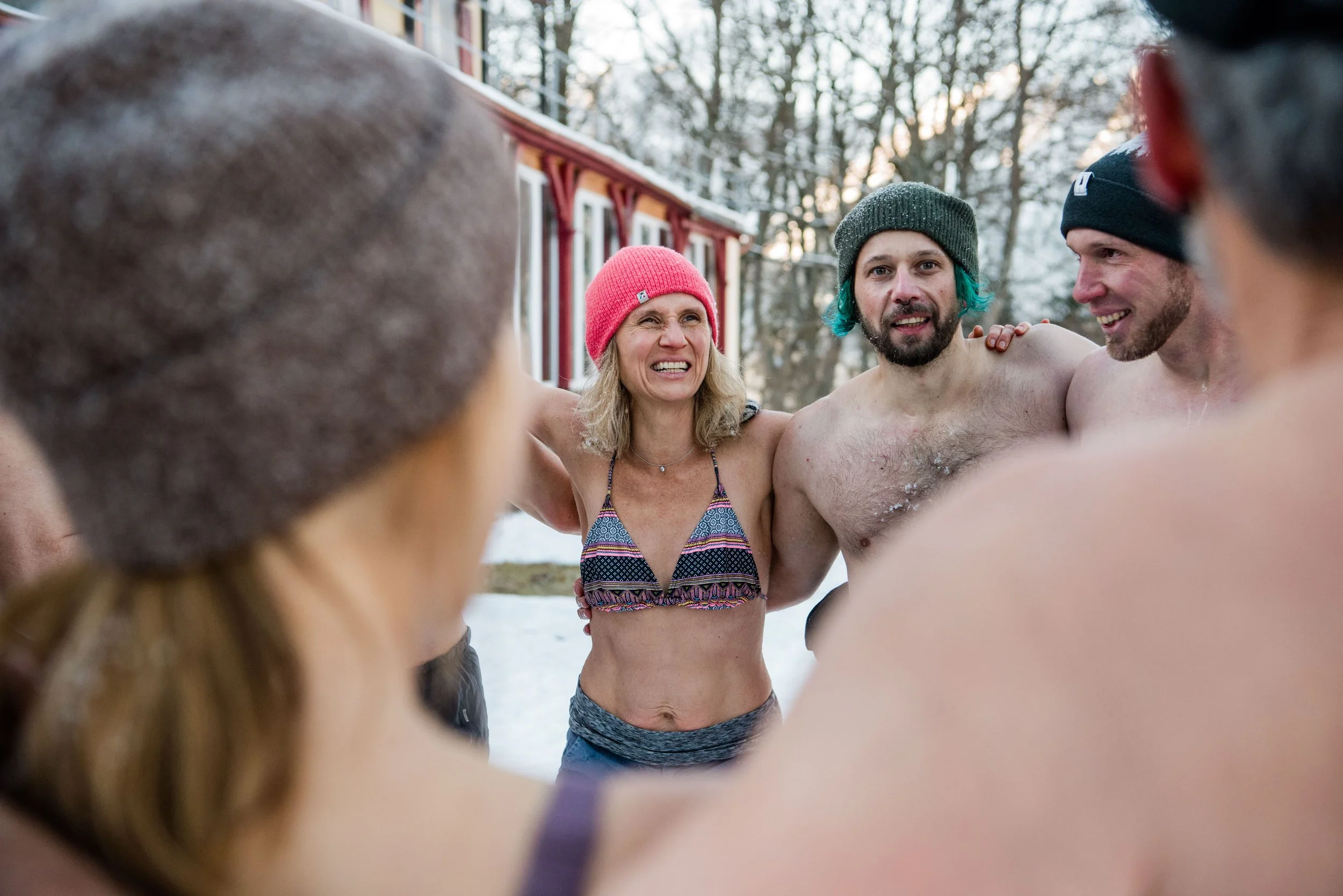
Ice Bathing AND WARMING UP PROPERLY: HOW TO GET WARM AGAIN AFTER COLD WATER IMMERSION
Do you treat yourself to an ice bath now and then? Maybe in a lake or river, early in the morning or after work? Would you like to step into cold water more often, if it weren’t for your body taking such a long time to warm up again? Too long to be ready, within a reasonable time, for the next meeting or whatever else your day has in store?
What experienced cold bathers know: staying in cold water isn’t the hardest part – rewarming is the art. And if you’re wondering what a “normal” rewarming time looks like: after two to three minutes in an ice bath, it can easily take up to an hour for the body to feel fully warm again.
And my almost ten years of working as a Wim Hof Instructor have taught me this: with a few good habits, we can significantly shorten this rewarming phase and make it much more pleasant.
MY PRACTICAL WARM-UP TIPS
1 Don’t bundle up too much
After your ice bath, pause for an instant and enjoy the feeling. When it’s reeealy cold outside, this is the moment I love to dare and shout a few times at the top of my lungs to keep the energy flowing.
Then calmly change out of wet clothes and put on a light layer. Together with proper shoes and something warm for your hands, that’s enough for the beginning.
The less we bundle up immediately after cold exposure, the better the temperature sensors in our skin can still detect the cold. This signals the body to slowly mix the cold blood from the extremities with the warmer blood around vital organs. The result is a gentler rewarming process, less strain on the heart, and an overall safer and healthier cold-bathing experience.
2. Don’t rush into the heat
Try not to step straight into very warm, heated rooms. And if you enjoy taking a hot shower right after your bath and ask me what I think about it: from my point of view, warm – or even hot – showers are a no-go.
Nothing is strictly forbidden, of course – and honestly, I’ve done it myself. After two or three minutes in cold water, it’s not dangerous. But if we immediately escape into warmth, we train neither our body nor our nervous system to deal calmly with cold and to rewarm on its own. Instead – and because the cold exposure isn’t truly over until you’re warm again – I recommend the following:
3. Let your muscles work
Plan around ten minutes of gentle strength exercises after each ice bath, for example:
Stand in a squat position and slowly lift and lower your left and right heels alternately.
For your upper body, move into a plank or push-up position and stay there as long as you can.
What ever exercise you choose, move slowly and without rush. While our blood is still cold, we want to keep our heartbeat calm. I
4. Breathe yourself warm
Generally, eep your mouth closed and breathe lightly and calmly through your nose – even during the exercises. This supports circulation and helps your body retain more warmth than mouth breathing does.
In between you might want to add a short time breathing technique proven for warming the body as f.ex. the Breath of Fire (Kapalabhati):
Quickly and forcefully exhale through the nose about 20–30 times by drawing the navel toward the spine and releasing again. Then inhale slowly and comfortably, hold the breath for a moment, and lightly engage your pelvic floor. Repeat this 3–5 times. If you’re new to intense breathing techniques, practice this exercise seated for safety and consider learning it with a qualified yoga teacher.
5. Relax and trust
Despite everything you may have heard about cold as a child, trust that your body is strong enough to warm itself up again, step by step. Relax your shoulders and your belly. Shift your attention away from the cold areas of your body toward the warmer ones – to the area just behind your navel for example.
And if you like, take this focus on what feels good with you into everyday life. I’m often surprised how much it helps me stay mentally warm, even on frosty days.
By the way, these are exactly the principles I teach in my ice-bathing workshops in Switzerland – not as dogma, but as an invitation to experience in your own body what becomes possible when we understand and support it.
Give it a try. And if you feel like sharing your experience with me, I’d love to hear from you.
P.S. If all of this – plus a cup of warm tea – still wasn’t enough, you may simply have stayed in the ice bath a little too long. I talk about finding the right cold dose in my blog article “How long and often should you ice bathe”.